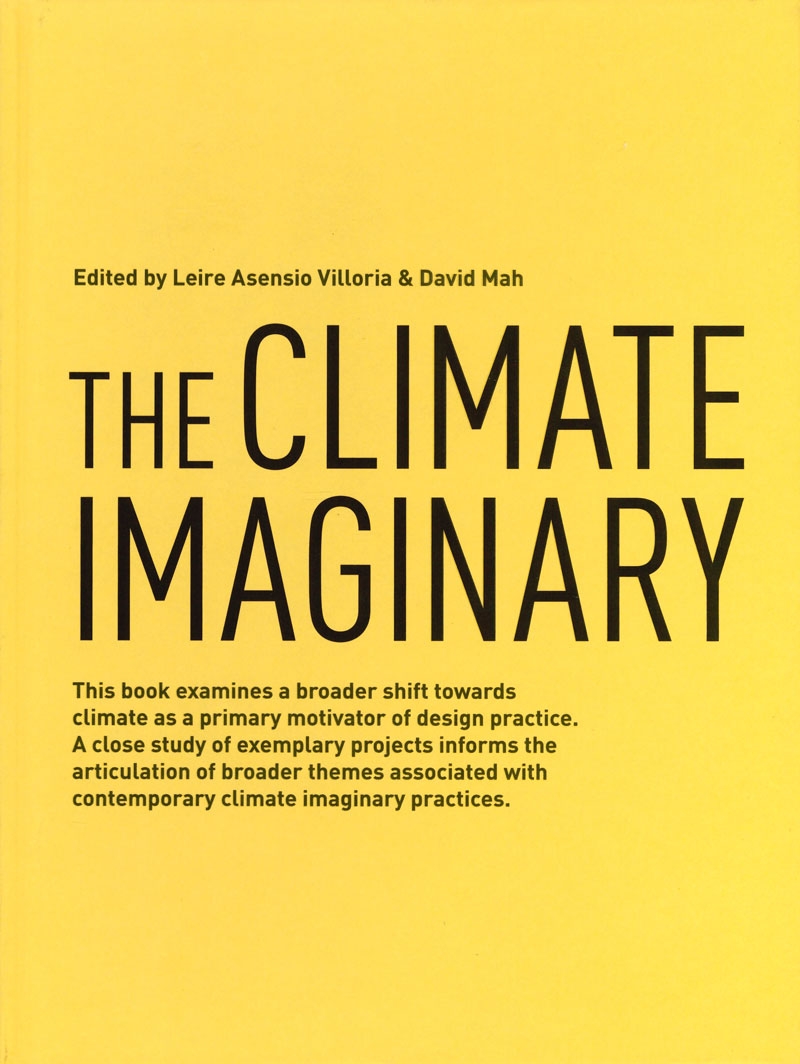
A visionary architecture and design book on the future of climate-responsive cities.
'The Climate Imaginary' by Leire Asensio Villoria and David Mah explores the intersection of climate change, design, and the built environment. Aimed at architects, designers, and urbanists, it presents forward-thinking approaches that go beyond traditional sustainability.
As the climate crisis reshapes how we live and build, this book highlights design as a cultural and imaginative force. It features a global selection of innovative projects, insights into climate-responsive architecture and urbanism, and richly illustrated examples of both speculative and practical solutions.
With contributions from leading international practices and researchers, The Climate Imaginary shows how design can rethink environmental, social, and political challenges.
A visionary architecture and design book exploring the future of climate-responsive cities.
'The Climate Imaginary' by Leire Asensio Villoria and David Mah is a book for architects, designers, urbanists, and anyone interested in the intersection of climate change, design, and the built environment.
As the global climate crisis reshapes how we live, work, and build, design is no longer just technical—it’s cultural, political, and imaginative. This book moves beyond traditional sustainability thinking and presents innovative, future-facing design approaches that respond to the urgency of climate change.
Featured content:
- A curated global collection of cutting-edge design projects
- Insights into climate-responsive architecture, urbanism, and landscape design
- Explorations of how climate change impacts society, culture, and everyday life
- Contributions from leading international practices and researchers
- Richly illustrated examples showcasing speculative and practical solutions
Rather than focusing solely on technical fixes, teh book 'The Climate Imaginary' highlights how design can reimagine futures, addressing the full spectrum of environmental, social, and political challenges.
With Contributions by: Abalos + Sentkiewicz, appareil, B+W+, C+ Arquitectas, Design Earth, EcoLogicStudio, Ecosistema Urbano, Pablo Lorenzo Eiroa, Ensamble, Fadi Masoud, Harvard Office for Urbanization, Iredale Pederson Hook, LLDS Architects, Lydia Kallipoliti, MAD Architects, the Melbourne School of Design, Op/AL, Terreform One (Mitchell Joachim) and Liam Young