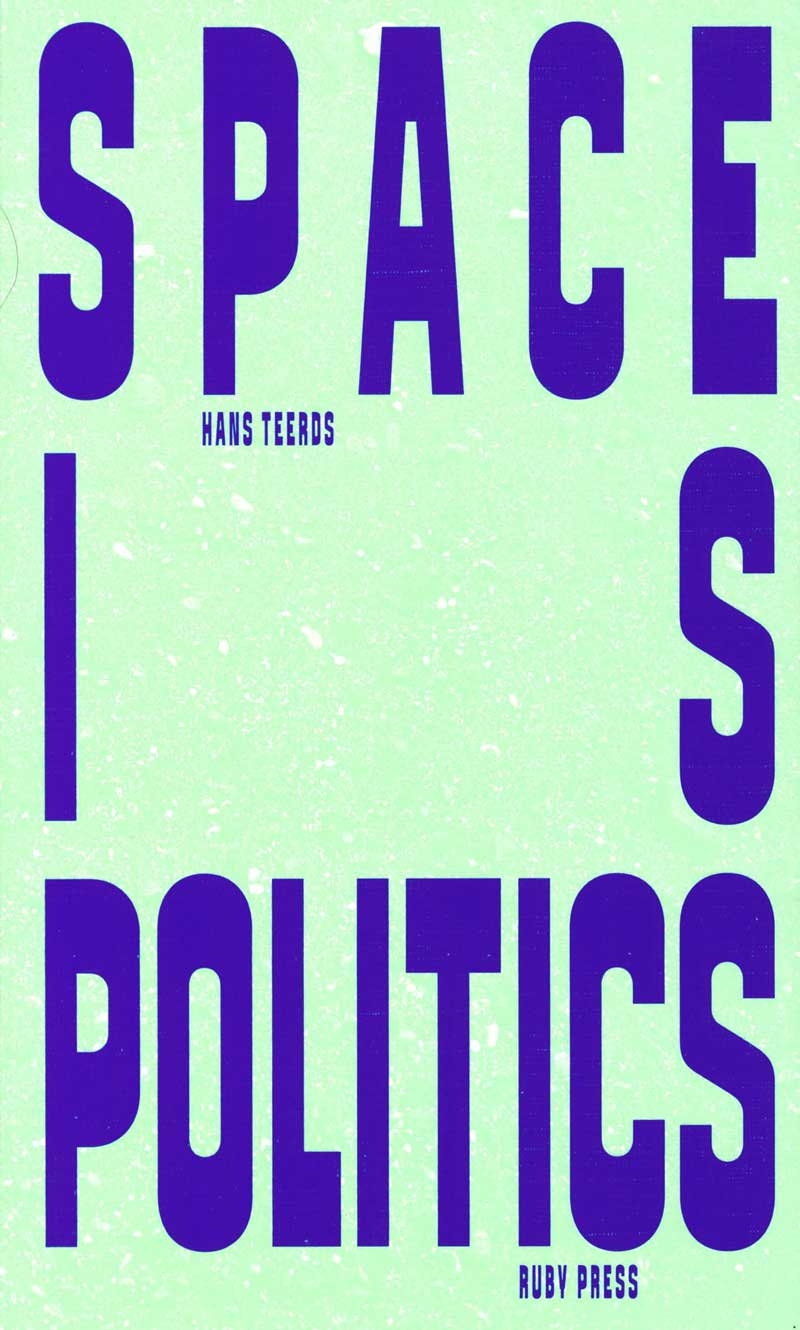
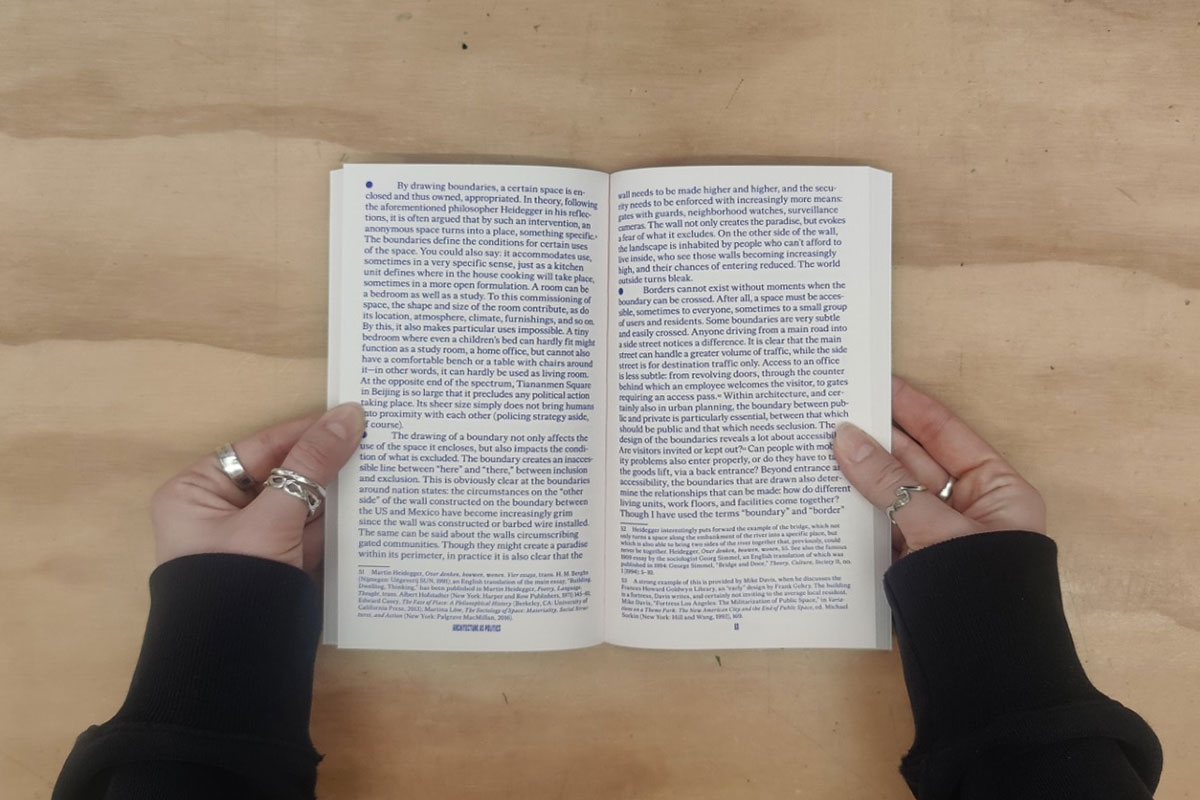
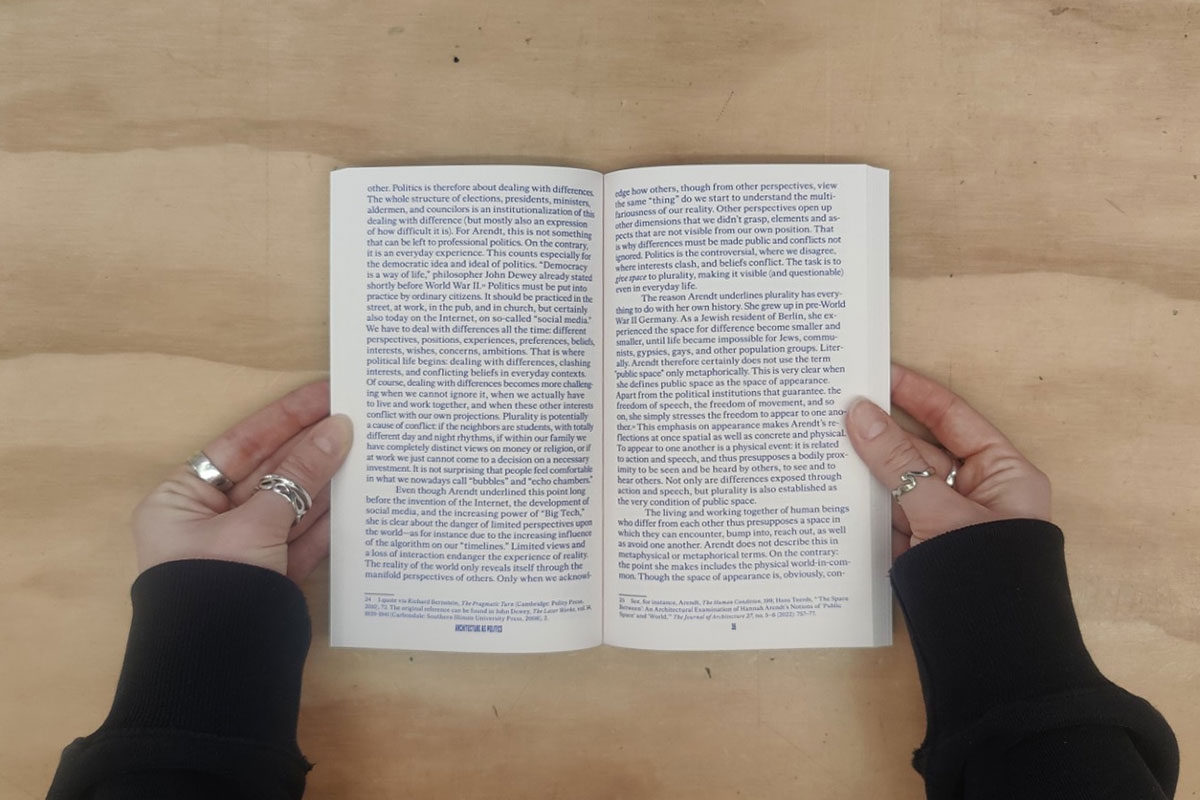
In the book 'Space is Politics', architect and urban planner Hans Teerds demonstrates that space is not merely a prerequisite for political activity; it is political in itself. Drawing on Hannah Arendt’s political theory, Teerds argues that architecture should be recognised as a social practice that shapes and influences who meets, who participates and who is excluded.
Democracy thrives on togetherness and physical encounters in public spaces, such as squares, parks, sidewalks, and café terraces. These spaces are not mere backdrops, but central places of democratic practice. But who decides how they are designed? Who is allowed to stay- and who is pushed out?
Teerds shows: Architecture is never neutral. It defines boundaries and creates access - as well as barriers. Therefore, it is always a political act. The question of who is permitted to occupy a space is a profoundly democratic one. ‘Space is Politics’ calls for public spaces to be reclaimed in social debates, moving them back into the political public sphere from the hands of investors and experts.
A manifesto for those who understand architecture as a political task, not a purely technical one, and it is a wake-up call to architects, urban planners and citizens to think of space as a common good and help shape it.
In the book 'Space is Politics', architect and urban planner Hans Teerds demonstrates that space is not merely a prerequisite for political activity; it is political in itself. Drawing on Hannah Arendt’s political theory, Teerds argues that architecture should be recognised as a social practice that shapes and influences who meets, who participates and who is excluded.
Democracy thrives on togetherness and physical encounters in public spaces, such as squares, parks, sidewalks, and café terraces. These spaces are not mere backdrops, but central places of democratic practice. But who decides how they are designed? Who is allowed to stay- and who is pushed out?
Teerds shows: Architecture is never neutral. It defines boundaries and creates access - as well as barriers. Therefore, it is always a political act. The question of who is permitted to occupy a space is a profoundly democratic one. ‘Space is Politics’ calls for public spaces to be reclaimed in social debates, moving them back into the political public sphere from the hands of investors and experts.
A manifesto for those who understand architecture as a political task, not a purely technical one, and it is a wake-up call to architects, urban planners and citizens to think of space as a common good and help shape it.