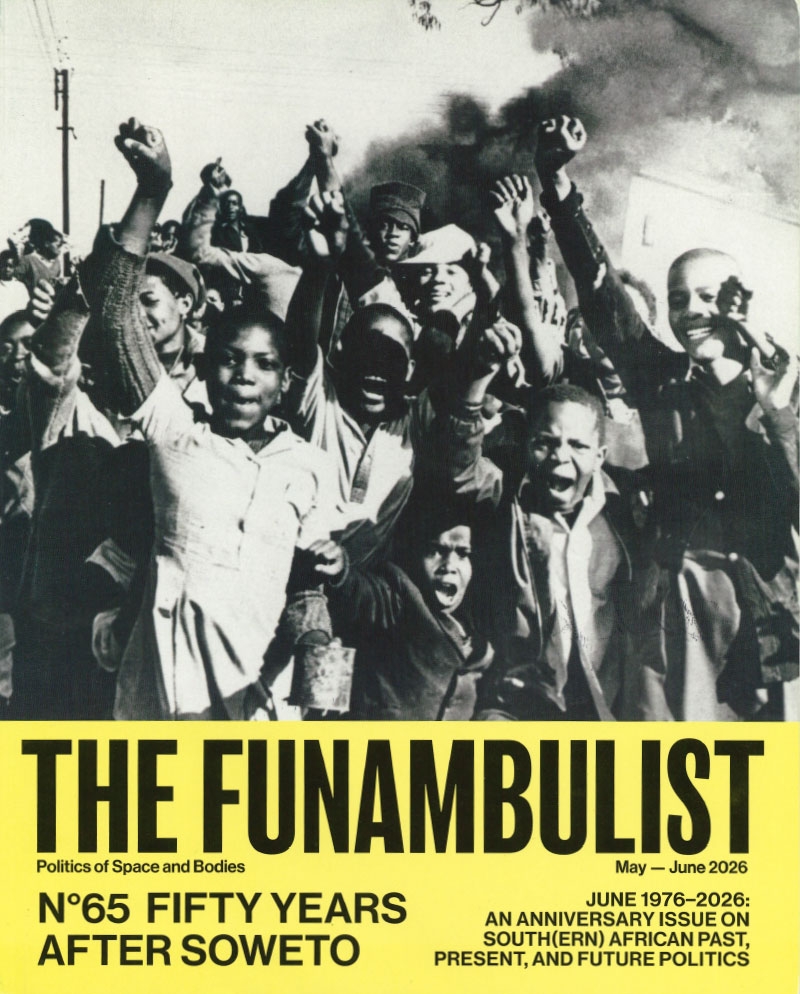
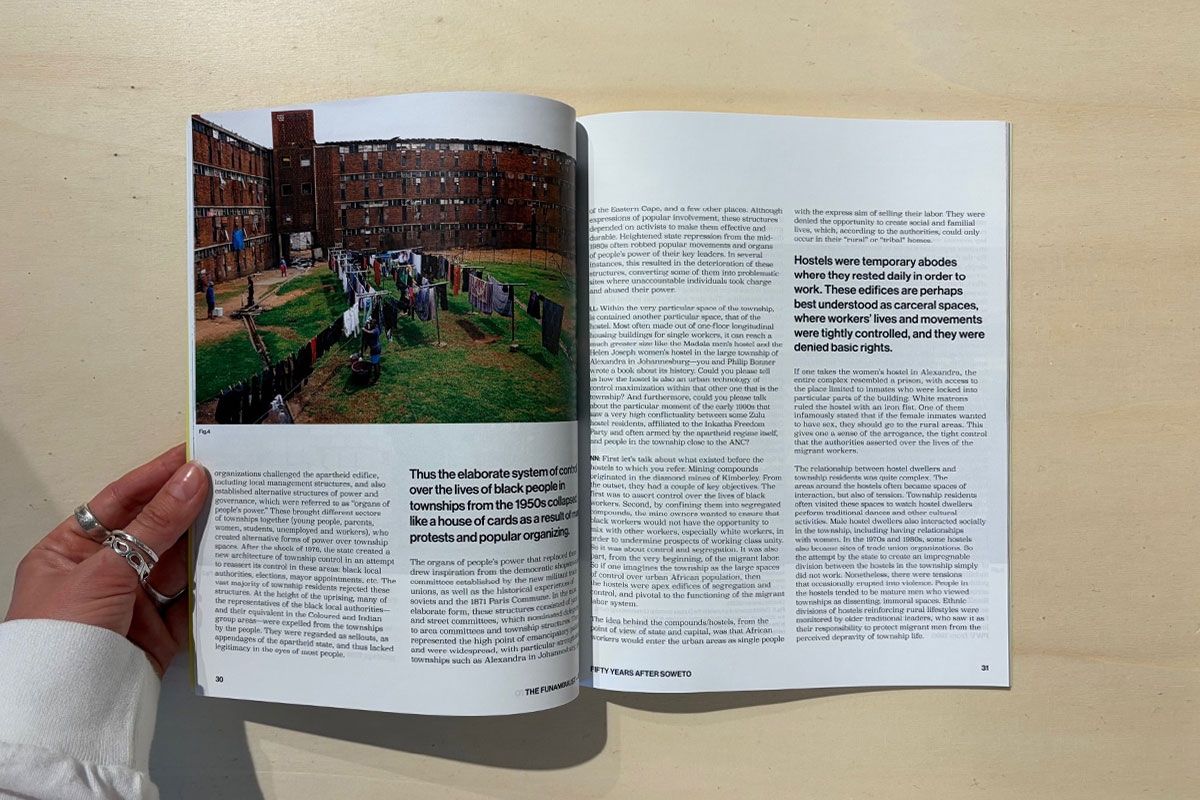
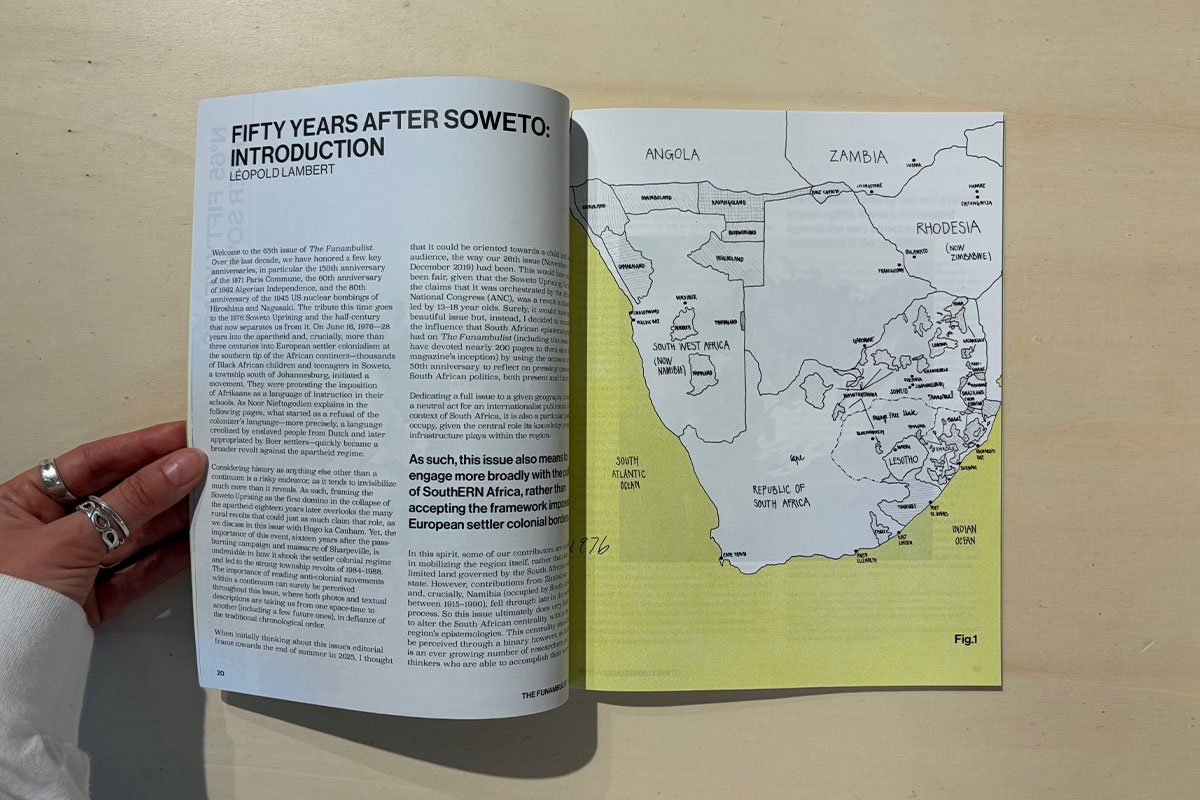
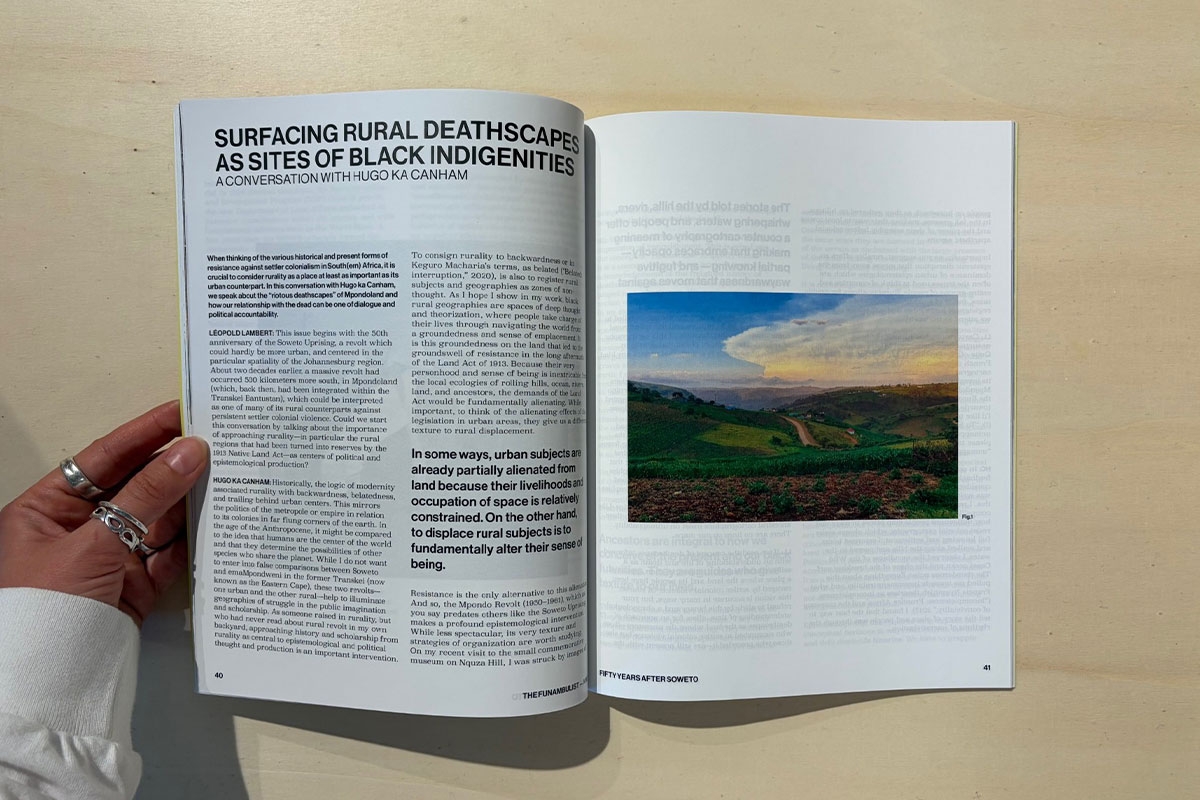
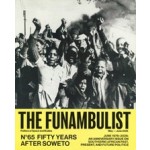
On June 16, 1976—28 years into the apartheid and, crucially, more than three centuries into European settler colonialism at the southern tip of the African continent—thousands of Black African children and teenagers in Soweto, a township south of Johannesburg, initiated a movement. They were protesting the imposition of Afrikaans as a language of instruction in their schools. Fifty years later, we honor the memory of this uprising by questioning South(ern) African historical and present politics. Accompanied by striking historical photos (in particular Peter Magubane‘s) and artworks (Lungiswa Gqunta with words by Nombuso Mathibela), the issue examines the space-time of the townships (Noor Nieftagodien), bantustans (Neo Maditla and Mpho Moshe Matheolane), the ocean (Kelly Gillespie and Traci Kwaai), as well as the relationships between Anglo and Boer settler colonialism with the land (Panashe Chigumadzi), deathscapes (Hugo ka Canham), ancestralization and time (Zara Julius and uMbuso weNkosi), and racialized nationalism (Alex Hotz).
In the News from the Fronts section, you can read texts about Vanuatu’s anticolonial solidarity with its Melanesian relatives’ struggles (Anna Naupa) and an analysis of the past decade of the Moroccan monarchy’s authoritarian, neoliberal and colonial policies in Morocco and Western Sahara (Omar Radi), as well as an architecture thesis research on amphibious landscapes in a fisher village of Bombay (Sharvin Jangle).
On June 16, 1976—28 years into the apartheid and, crucially, more than three centuries into European settler colonialism at the southern tip of the African continent—thousands of Black African children and teenagers in Soweto, a township south of Johannesburg, initiated a movement. They were protesting the imposition of Afrikaans as a language of instruction in their schools. Fifty years later, we honor the memory of this uprising by questioning South(ern) African historical and present politics. Accompanied by striking historical photos (in particular Peter Magubane‘s) and artworks (Lungiswa Gqunta with words by Nombuso Mathibela), the issue examines the space-time of the townships (Noor Nieftagodien), bantustans (Neo Maditla and Mpho Moshe Matheolane), the ocean (Kelly Gillespie and Traci Kwaai), as well as the relationships between Anglo and Boer settler colonialism with the land (Panashe Chigumadzi), deathscapes (Hugo ka Canham), ancestralization and time (Zara Julius and uMbuso weNkosi), and racialized nationalism (Alex Hotz).
In the News from the Fronts section, you can read texts about Vanuatu’s anticolonial solidarity with its Melanesian relatives’ struggles (Anna Naupa) and an analysis of the past decade of the Moroccan monarchy’s authoritarian, neoliberal and colonial policies in Morocco and Western Sahara (Omar Radi), as well as an architecture thesis research on amphibious landscapes in a fisher village of Bombay (Sharvin Jangle).