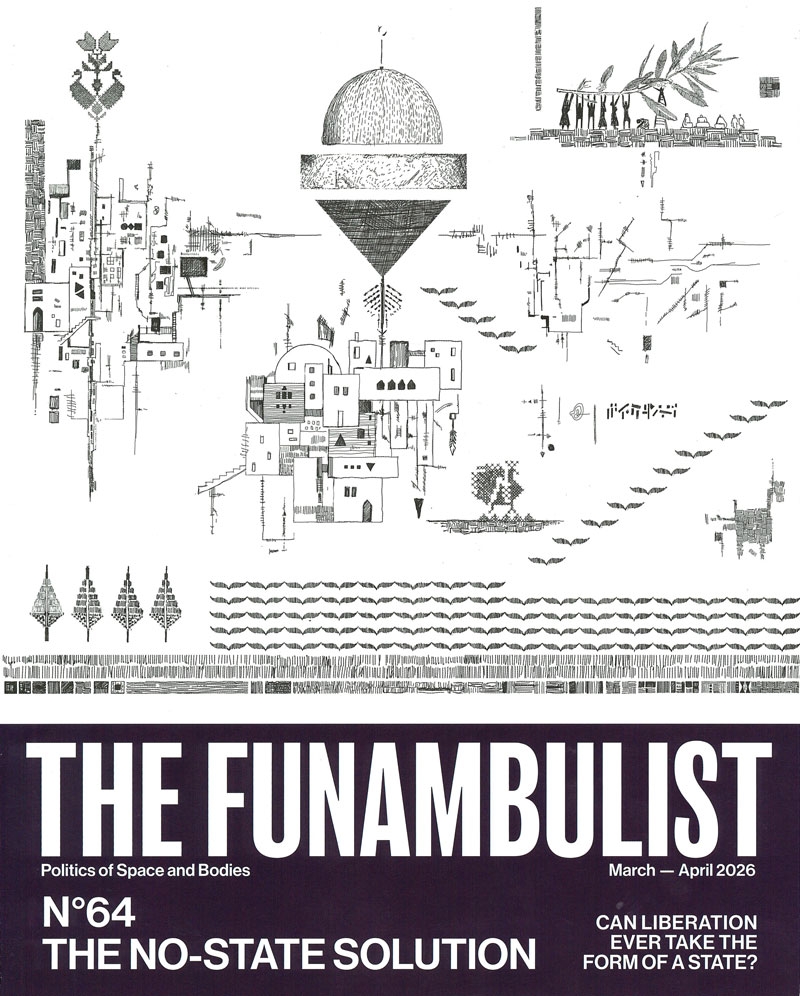
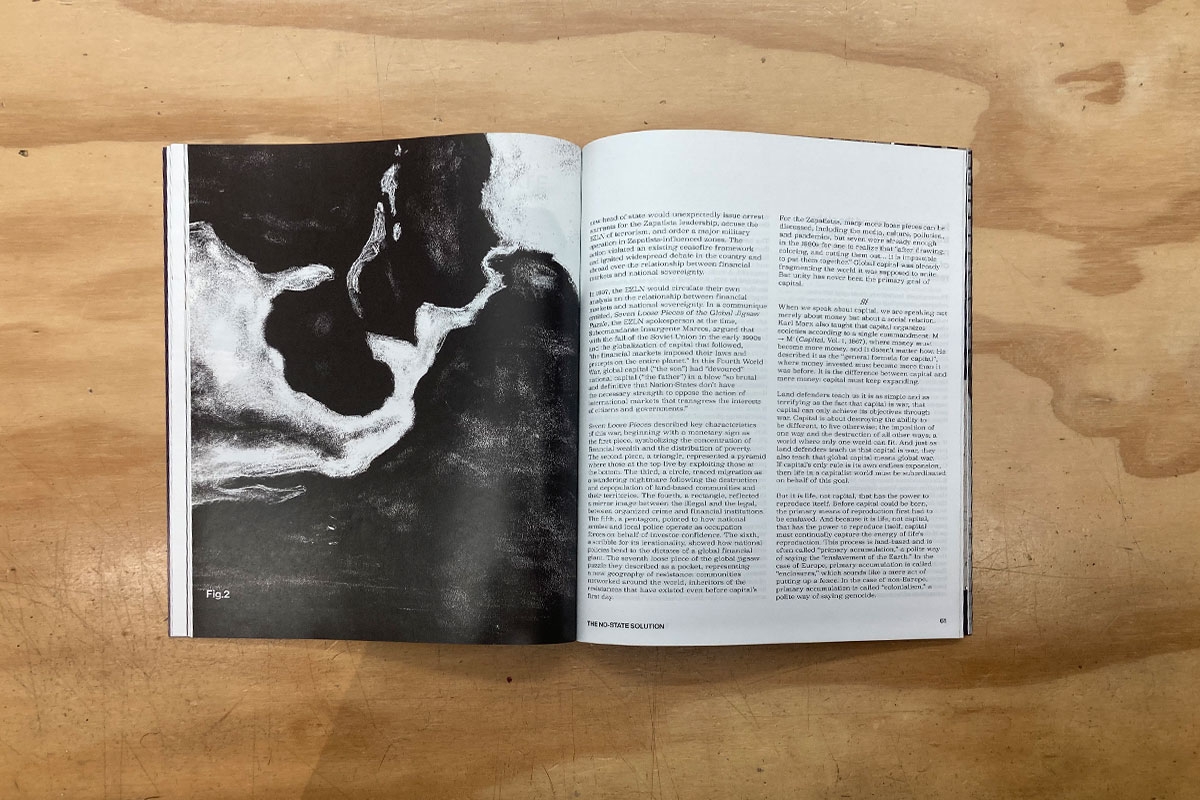
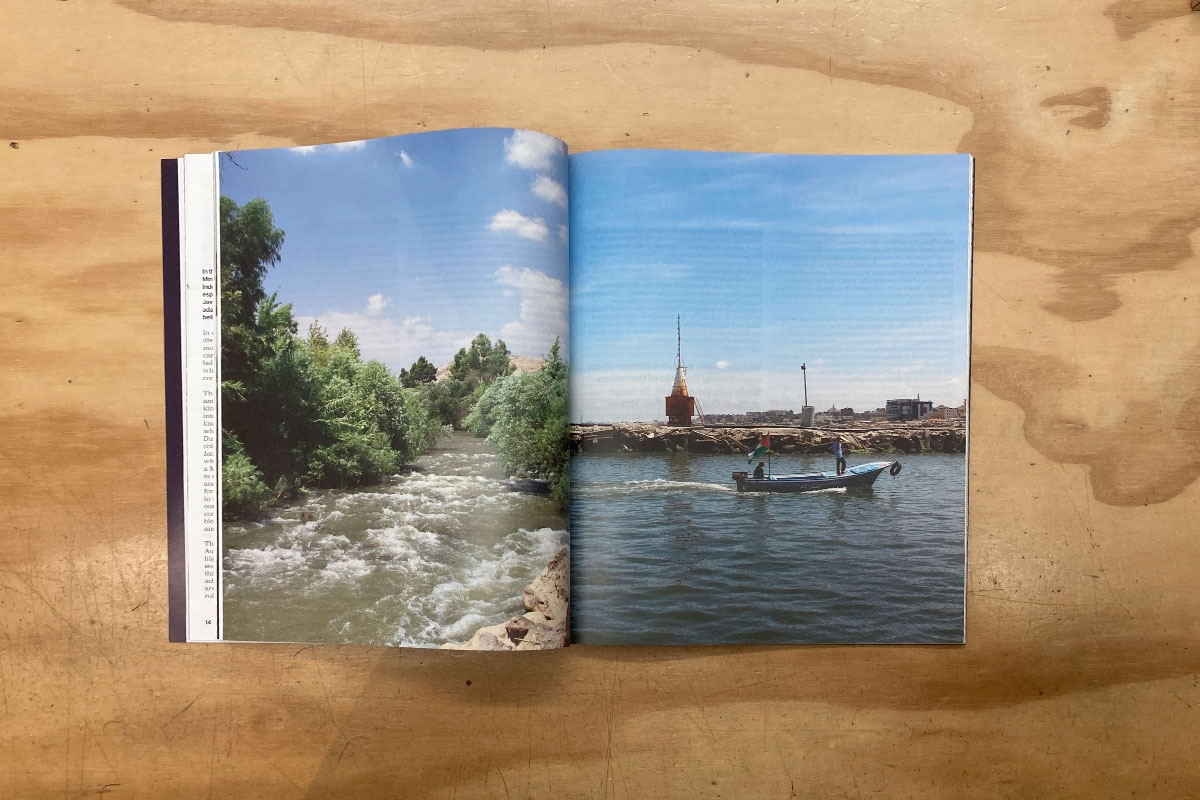
In the summer of 2025, nine Western States formally recognized the State of Palestine. This State recognition and the resurrection of the moribund so-called “two-State solution” is combined with a criminalization of calls to liberate Palestine “from the river to the sea.” This issue asks: can liberation ever take the form of a state? Borrowing a phrase Sophia Azeb used multiple times in the history of The Funambulist (since our first conversation in 2014), The No-State Solution intends to revisit this concept in the context of Palestine in challenging the very idea of “solution” (Sophia Azeb & Rebecca Gross), but also in other liberation struggles such as the Kurdish (Havin Guneser) and Zapatista (Linda Quiquivix) ones. It warns us against state dreams, such as the ones implemented in Sierra Leone and Liberia (what William C. Anderson calls “Black Zionism” in his contribution), and questions the differences between State and community forms of governance, in particular when it comes to healthcare, as made evident in Cuba and Venezuela (Lisbeth Moya González). Finally, it envisions borderless, stateless futures in Aotearoa (Kai-rui Cheng) and Kanaky (Florenda Nirikani). As for the artwork on the cover, it is an original creation by Samir Harb.
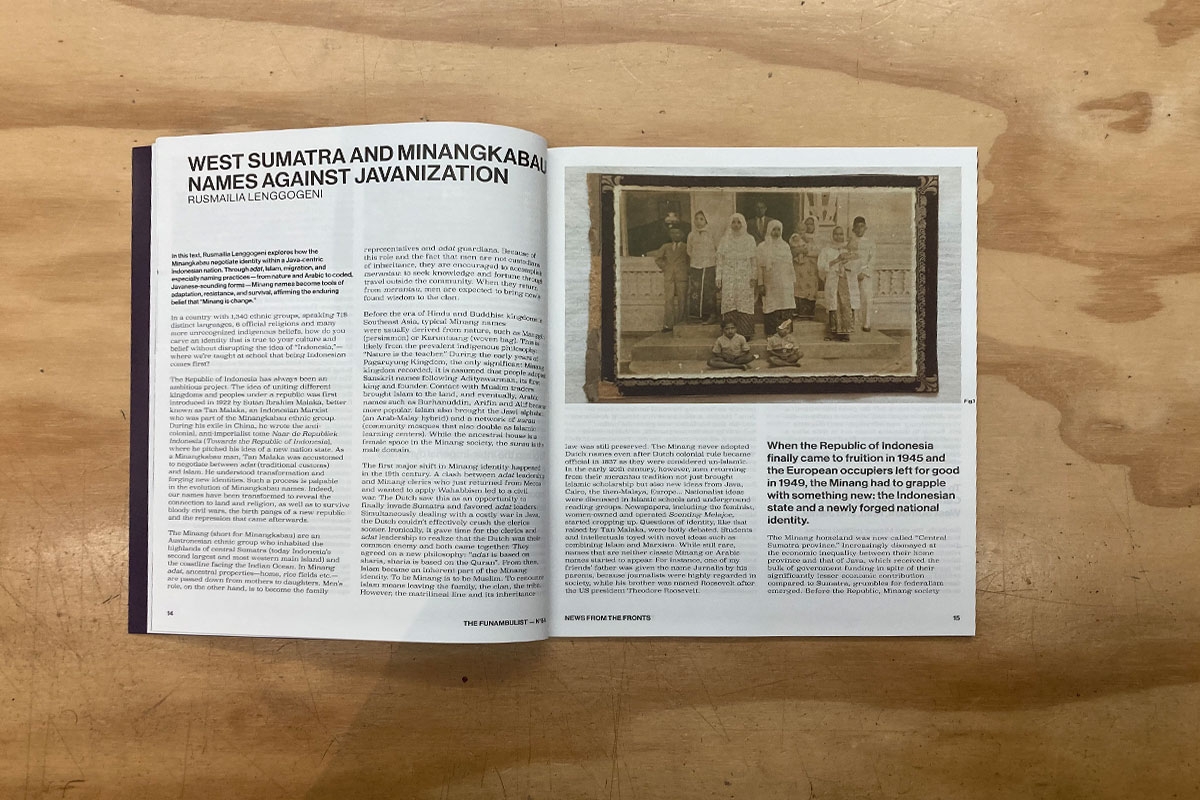
In the News from the Fronts section, you can read four texts about the transformation of northern Việt Nam’s land and water in the past century (Ngọc Nâu), the necessary balancing act of the ongoing Georgian movement to find independence from Russian imperialism, but also from European one (Keto Gorgadze), the act of naming as a Minangkabau tactic to challenge the Javanization of Indonesia (Rusmailia Lenggogeni), and land stewardship through craft and architecture in rural Ghana (Courage Dzidula Kpodo).
Also the new section of intergenerational transmission continues, entitled “Learning With Our Elders,” in which an activist/militant shares with us something they learn from a past mistake or failure. We hear from Nils Andersson, who, from Switzerland, published banned books by France during the Algerian Revolution.
In the summer of 2025, nine Western States formally recognized the State of Palestine. This State recognition and the resurrection of the moribund so-called “two-State solution” is combined with a criminalization of calls to liberate Palestine “from the river to the sea.” This issue asks: can liberation ever take the form of a state? Borrowing a phrase Sophia Azeb used multiple times in the history of The Funambulist (since our first conversation in 2014), The No-State Solution intends to revisit this concept in the context of Palestine in challenging the very idea of “solution” (Sophia Azeb & Rebecca Gross), but also in other liberation struggles such as the Kurdish (Havin Guneser) and Zapatista (Linda Quiquivix) ones. It warns us against state dreams, such as the ones implemented in Sierra Leone and Liberia (what William C. Anderson calls “Black Zionism” in his contribution), and questions the differences between State and community forms of governance, in particular when it comes to healthcare, as made evident in Cuba and Venezuela (Lisbeth Moya González). Finally, it envisions borderless, stateless futures in Aotearoa (Kai-rui Cheng) and Kanaky (Florenda Nirikani). As for the artwork on the cover, it is an original creation by Samir Harb.
In the News from the Fronts section, you can read four texts about the transformation of northern Việt Nam’s land and water in the past century (Ngọc Nâu), the necessary balancing act of the ongoing Georgian movement to find independence from Russian imperialism, but also from European one (Keto Gorgadze), the act of naming as a Minangkabau tactic to challenge the Javanization of Indonesia (Rusmailia Lenggogeni), and land stewardship through craft and architecture in rural Ghana (Courage Dzidula Kpodo).
Also the new section of intergenerational transmission continues, entitled “Learning With Our Elders,” in which an activist/militant shares with us something they learn from a past mistake or failure. We hear from Nils Andersson, who, from Switzerland, published banned books by France during the Algerian Revolution.