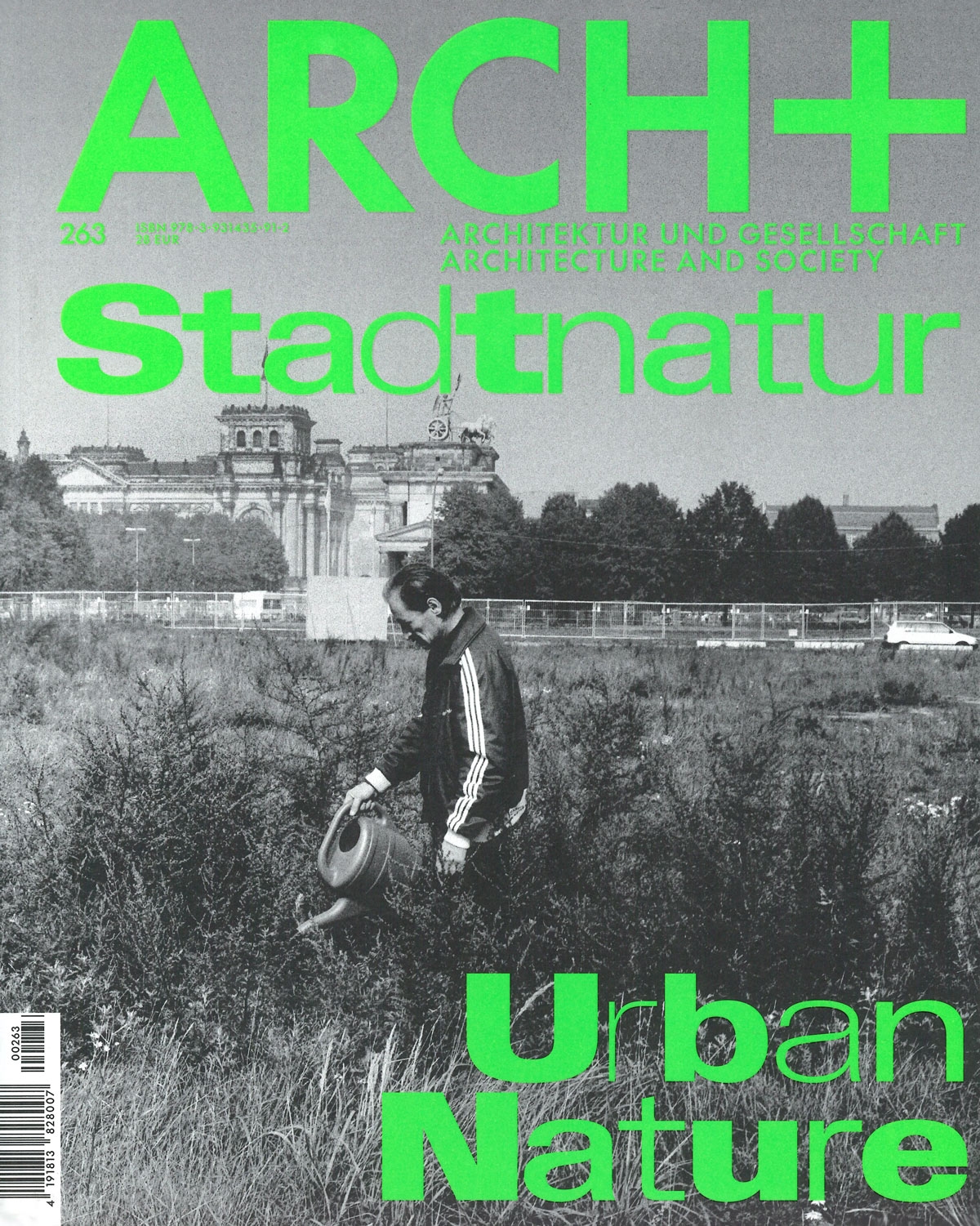
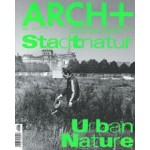
ARCH+ 263 verkent stedelijke natuur als een politieke, ecologische en ontwerpmatige uitdaging. Met essays, interviews en casestudy’s herdefinieert dit nummer de relatie tussen stad, landschap en klimaat.
Stedelijke natuur wordt vaak gezien als een groene toevoeging of oplossing voor klimaatadaptatie, maar dit perspectief is te beperkt. Steden zijn al ecologische systemen waarin bodem, water, planten, infrastructuur en politieke keuzes nauw verweven zijn. Stedelijke natuur is daarom geen correctie achteraf, maar een essentieel onderdeel van de stad zelf.
Dit nummer pleit voor een nieuwe benadering: stedelijke natuur als een politiek en democratisch project. Thema’s zoals bodem, ecologische rechtvaardigheid en landschapsarchitectuur in het Antropoceen staan centraal. Stedelijke natuur wordt hierbij gezien als zowel een collectieve hulpbron als een plek van conflict, waar de sociaal-ecologische toekomst van de stad vorm krijgt.
ARCH+ 263 verkent stedelijke natuur als een politieke, ecologische en ontwerpmatige uitdaging. Aan de hand van essays, interviews en casestudy’s herdefinieert dit nummer hoe we de relatie tussen stad, landschap en klimaat begrijpen.
Wanneer stedelijke natuur ter sprake komt, verschijnt die vaak als een groene toevoeging: een remedie voor stedelijke tekorten, een technische oplossing in het kader van klimaatadaptatie, of een esthetische upgrade. Zo’n benadering vernauwt het perspectief. Ze reduceert natuur tot een functie en verhult het feit dat steden al ecologische formaties zijn waarin bodem, water, planten, infrastructuren en politieke beslissingen onlosmakelijk met elkaar verweven zijn. Stedelijke natuur is geen achteraf aangebrachte correctie op de stad, maar een uitdrukking van haar materiële, sociale en historische condities.
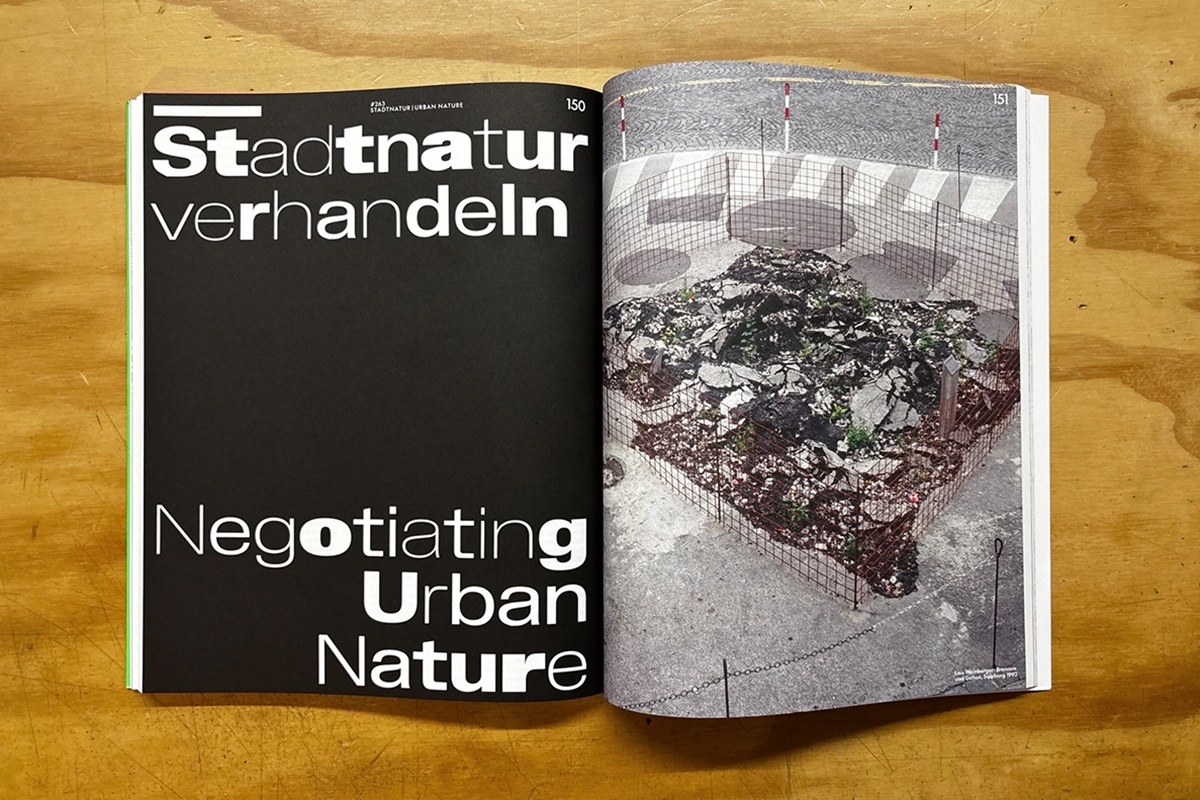
Dit nummer van ARCH+ over stedelijke natuur stelt daarom een perspectiefverschuiving voor: weg van het idee van stedelijke natuur als decoratieve verfraaiing of compenserende maatregel, en richting een begrip ervan als een politiek en democratisch project. Centraal in deze verkenning staan vragen rond bodem, ecologische rechtvaardigheid en de rol van de ontwerpdisciplines – met name de landschapsarchitectuur – in het Antropoceen. Stedelijke natuur verschijnt hier zowel als een collectieve hulpbron als een plek van conflict, waar de sociaal-ecologische toekomst van de stad wordt uitonderhandeld.