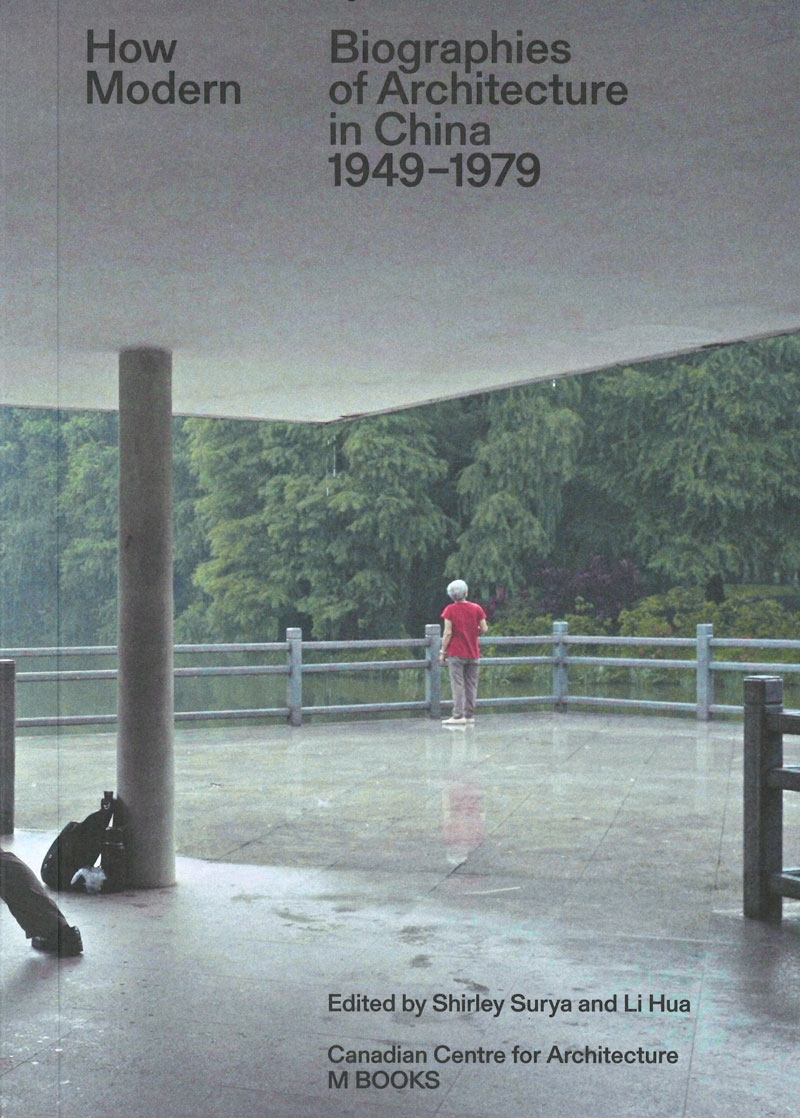
Between the founding of the People’s Republic of China in 1949 and the implementation of Reform and Opening Up policies in 1979, architecture played a key role in shaping China’s vision for socialist modernity. However, driven by shifting policies throughout these three decades, modern Chinese architecture has largely been perceived as stunted. Many misconceptions of this history persist: that nationalization and collectivism denied architects creative independence, that projects focused on industrial productivity over design quality, and that the promotion of a “national style” limited more modern formal choices.
At once a question and a proposition, How Modern: Biographies of Architecture in China 1949–1979 reassesses New China’s architectural production. Reproducing primary sources alongside short essays and interviews with architects, archivists, historians, and residents, the book reflects on issues such as agency, innovation, collaboration, expertise, standardization, craft, and local and international impact. It challenges a monolithic history of socialist modernity by foregrounding the varied conditions under which modernism was conceived, realized, and experienced.
With texts and interviews by Jennifer Altehenger, Lu Andong, Liu Diyu, Zhao Jijun, Yung Ho Chang, Zhu Guangya, Ma Guoxin, Xia Heng, Christine I. Ho, Li Hua, Feng Jiang, Doreen Heng Liu, Cheng Lizhen, Cole Roskam, Shirley Surya, Zhang Wei und | and Xu Wenlu. With film stills by Wang Tuo.
Between the founding of the People’s Republic of China in 1949 and the implementation of Reform and Opening Up policies in 1979, architecture played a key role in shaping China’s vision for socialist modernity. However, driven by shifting policies throughout these three decades, modern Chinese architecture has largely been perceived as stunted. Many misconceptions of this history persist: that nationalization and collectivism denied architects creative independence, that projects focused on industrial productivity over design quality, and that the promotion of a “national style” limited more modern formal choices.
At once a question and a proposition, How Modern: Biographies of Architecture in China 1949–1979 reassesses New China’s architectural production. Reproducing primary sources alongside short essays and interviews with architects, archivists, historians, and residents, the book reflects on issues such as agency, innovation, collaboration, expertise, standardization, craft, and local and international impact. It challenges a monolithic history of socialist modernity by foregrounding the varied conditions under which modernism was conceived, realized, and experienced.
With texts and interviews by Jennifer Altehenger, Lu Andong, Liu Diyu, Zhao Jijun, Yung Ho Chang, Zhu Guangya, Ma Guoxin, Xia Heng, Christine I. Ho, Li Hua, Feng Jiang, Doreen Heng Liu, Cheng Lizhen, Cole Roskam, Shirley Surya, Zhang Wei und | and Xu Wenlu. With film stills by Wang Tuo.