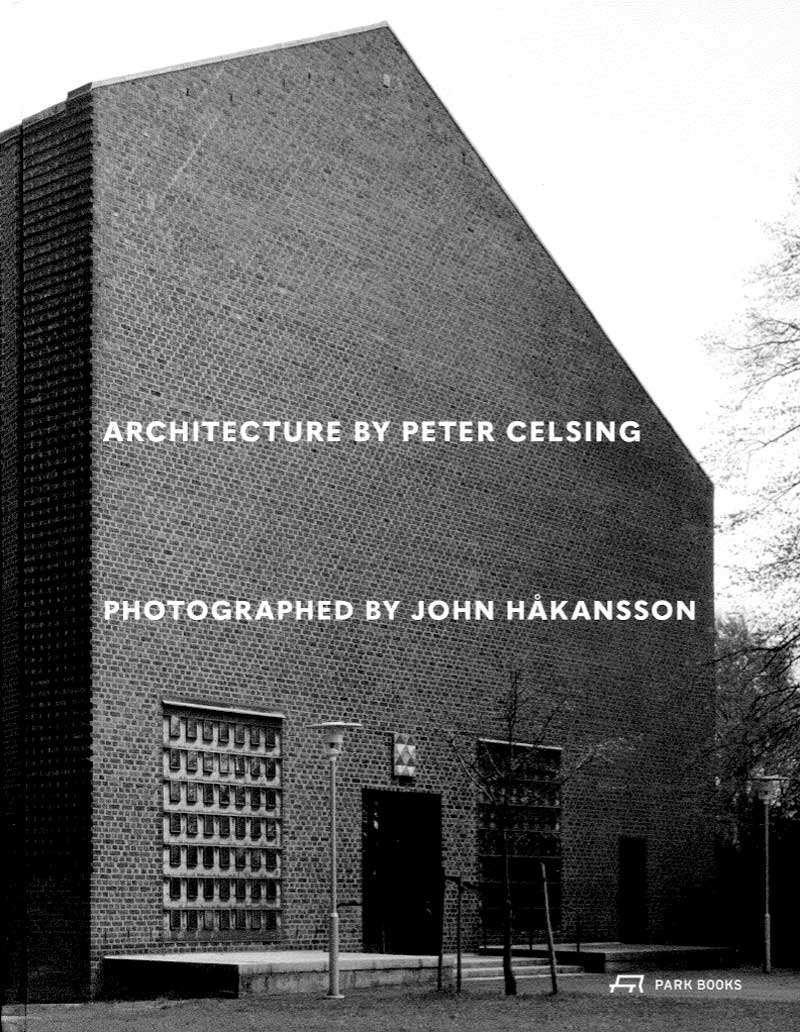
Peter Celsing (1920-1974) belongs to the small group of Swedish modernist architects, including luminaries such as Gunnar Asplund (1885-1940) and Sigurd Lewerentz (1885-1975), who have rightly attracted attention beyond the country's borders. How Celsing approached and carried out his commissions testifies to a great understanding of architecture as an applied art, where function and economy are important parameters. At the same time, during a major shift in the construction industry from more small-scale and artisanal to large-scale and prefabricated, Celsing managed the feat of running his projects with artistic integrity.
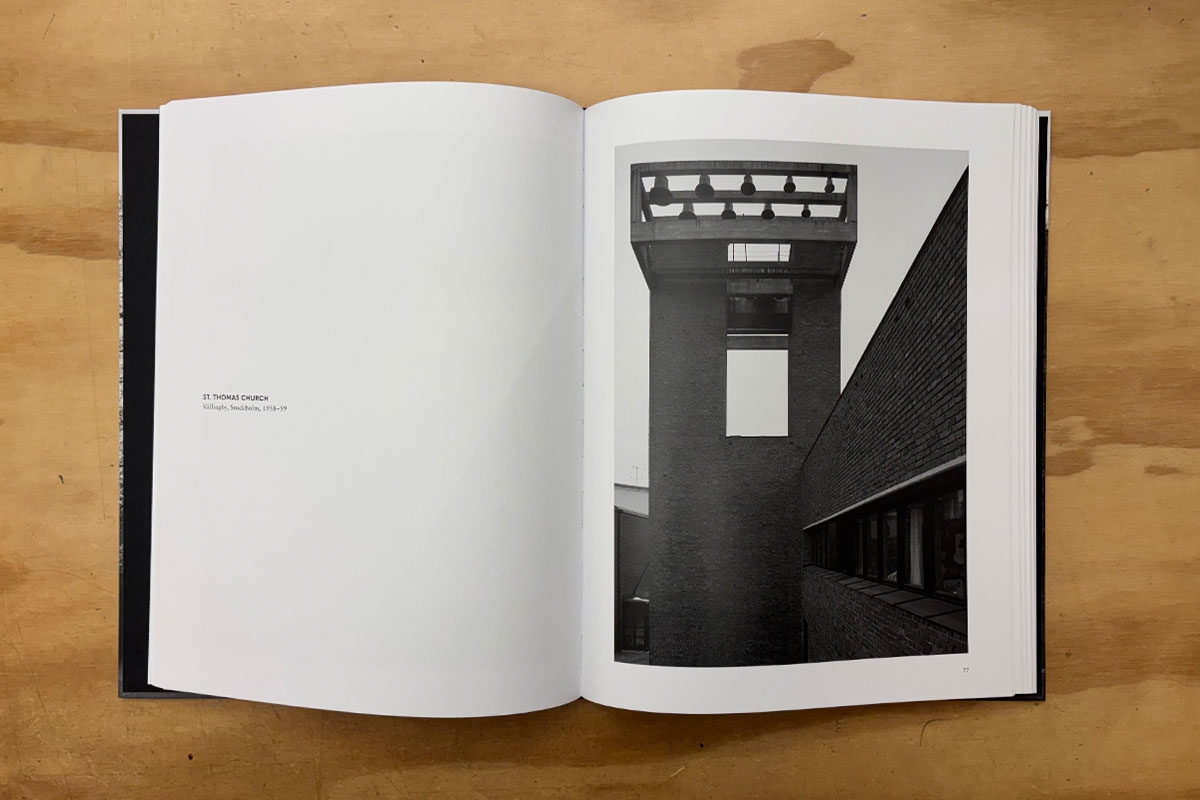
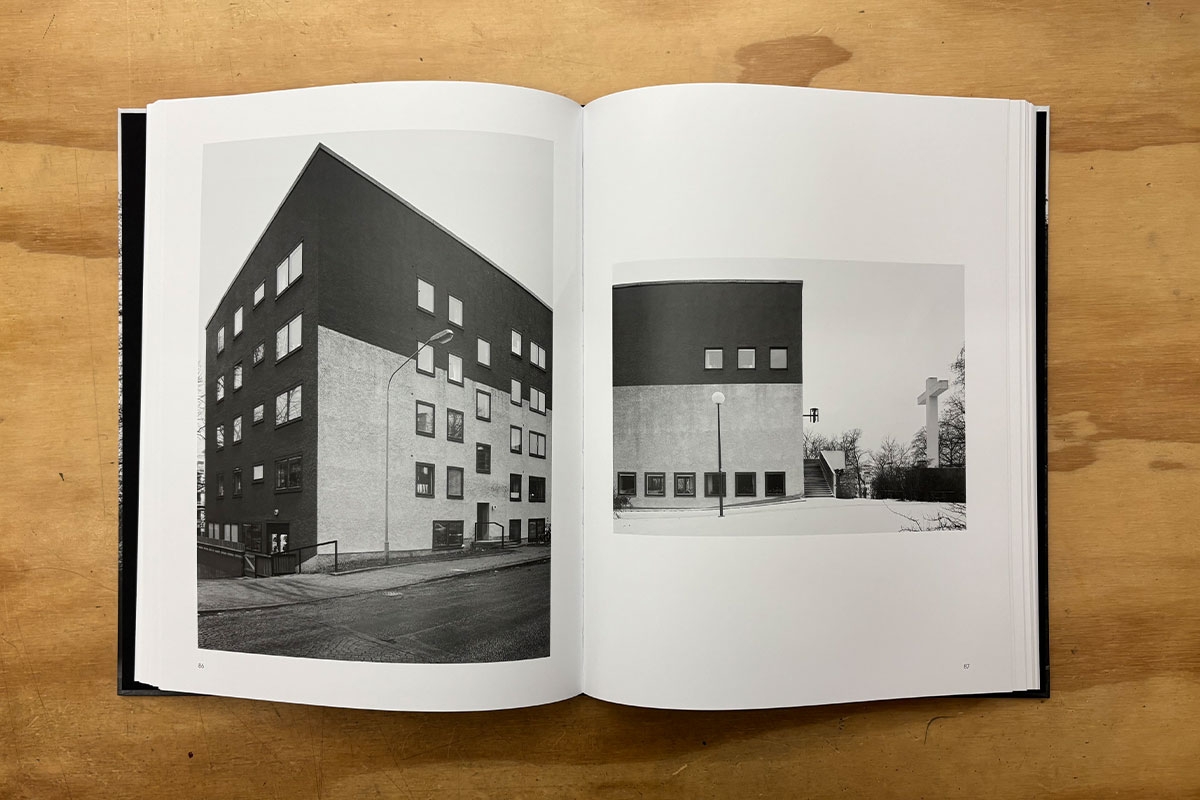
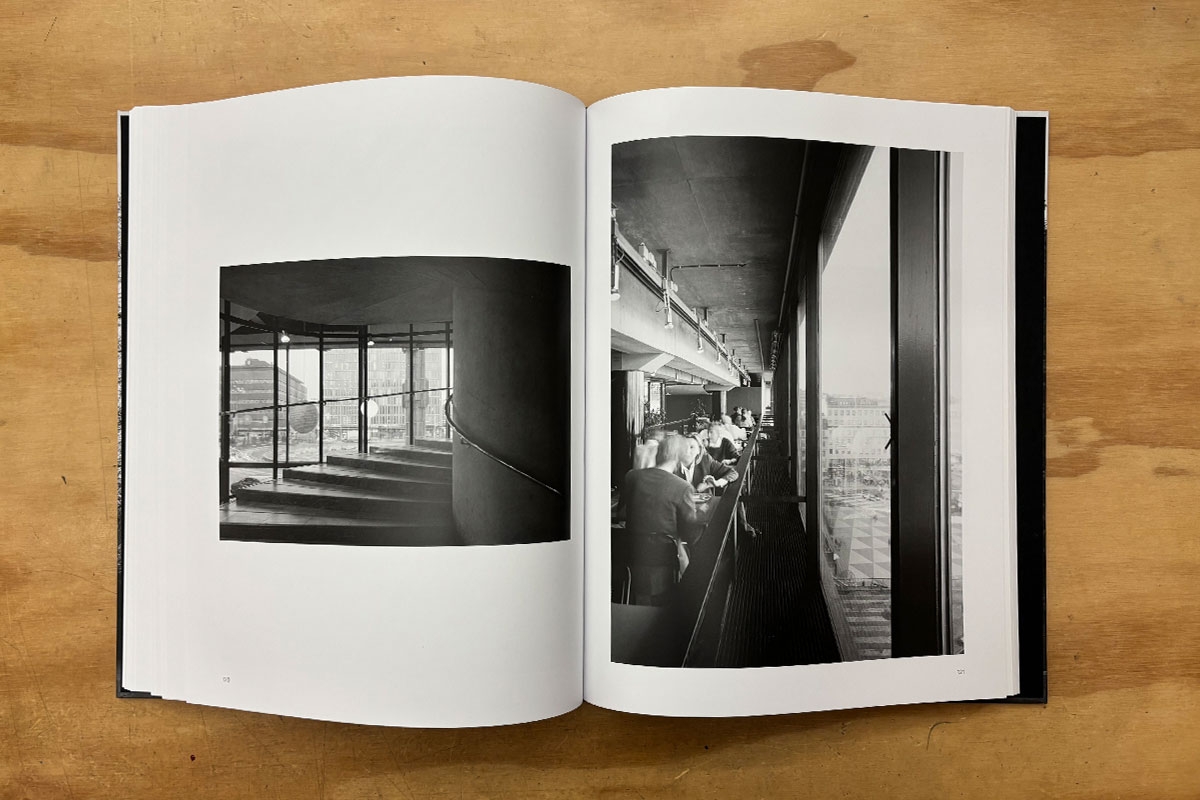
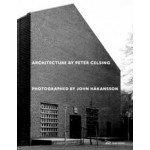
John Håkansson's black and white photographs, taken in the mid-1990s, capture the essence of Celsing’s buildings. In many cases, the images are now a valuable document of that era, since some of the buildings have changed, and not always in a favorable way. In this beautiful volume, supplemented by insightful texts contributed by architect Staffan Henriksson and artist Maria Lantz, Håkansson's skillful photography forms a loving and sensitive portrait of Celsing's architecture.
Peter Celsing (1920-1974) belongs to the small group of Swedish modernist architects, including luminaries such as Gunnar Asplund (1885-1940) and Sigurd Lewerentz (1885-1975), who have rightly attracted attention beyond the country's borders. How Celsing approached and carried out his commissions testifies to a great understanding of architecture as an applied art, where function and economy are important parameters. At the same time, during a major shift in the construction industry from more small-scale and artisanal to large-scale and prefabricated, Celsing managed the feat of running his projects with artistic integrity.
John Håkansson's black and white photographs, taken in the mid-1990s, capture the essence of Celsing’s buildings. In many cases, the images are now a valuable document of that era, since some of the buildings have changed, and not always in a favorable way. In this beautiful volume, supplemented by insightful texts contributed by architect Staffan Henriksson and artist Maria Lantz, Håkansson's skillful photography forms a loving and sensitive portrait of Celsing's architecture.